
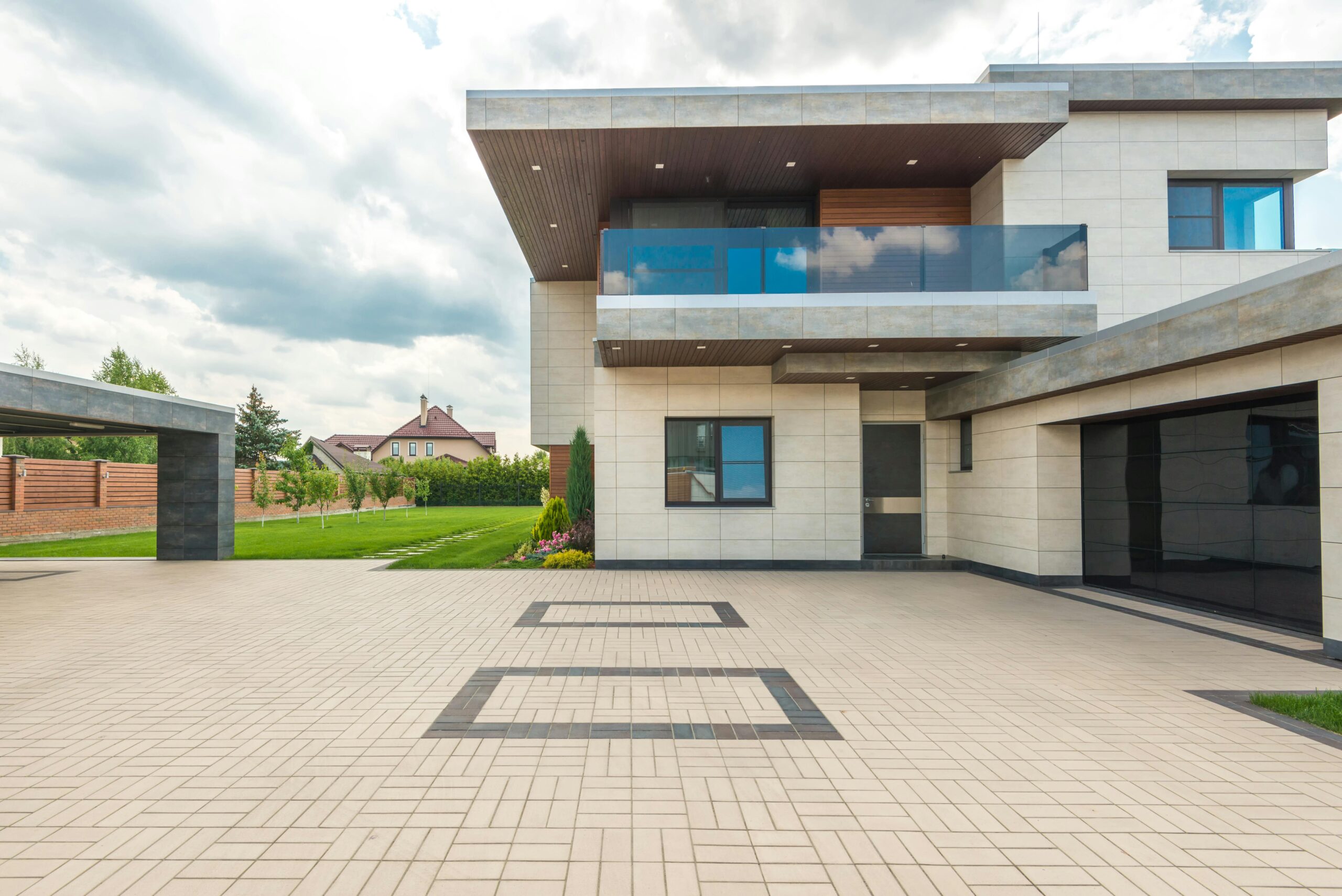
Your driveway is more than just a place to park—it’s the first impression your home makes. As homeowners increasingly prioritize both design and durability, interlocking driveways have quickly become one of the most sought-after upgrades in residential landscaping.
From superior aesthetics to long-term resilience, interlocking pavers offer a unique blend of style, strength, and sustainability that other materials simply can’t match.
What Is an Interlocking Driveway?
An interlocking driveway consists of individual pavers—typically made from concrete, natural stone, or brick—that are installed in a specific pattern over a compacted base. These pavers “lock” together without the need for mortar, creating a flexible yet secure surface.
Unlike traditional concrete or asphalt, this method allows the driveway to expand and contract with seasonal changes, which significantly reduces the risk of cracking or heaving.
Curb Appeal That Makes a Statement
In a competitive housing market, first impressions matter. Interlocking driveways dramatically enhance a home’s visual appeal. They come in a wide range of colours, patterns, and textures, allowing you to tailor the look to suit your home’s architectural style.
Whether you prefer a clean, modern aesthetic or a more rustic, old-world charm, there’s an interlocking pattern and palette to match. Many homeowners even incorporate borders or inlays for a custom touch that elevates the overall design.
Built to Endure Canadian Climates
Driveways in regions like Southern Ontario are constantly tested by freeze-thaw cycles, ice buildup, and heavy rainfall. Traditional poured concrete and asphalt often fail under such pressure, leading to cracks, dips, and long-term damage.
Interlocking pavers, however, are individually set, allowing for slight movement without structural compromise. If one paver becomes damaged, it can be replaced quickly and affordably without disturbing the surrounding area—something that’s not possible with solid concrete or asphalt slabs.
Sustainable and Eco-Friendly
One of the lesser-known advantages of interlocking driveways is their potential for sustainability. Many systems are designed with permeability in mind, allowing rainwater to seep through the joints and return to the soil below. This not only helps reduce surface runoff and pooling but also supports local stormwater systems.
Some homeowners even opt for eco-friendly paver bases that use recycled materials or promote groundwater recharge, making this a smart choice for those committed to sustainable living.
Low Maintenance, High Reward
Keeping an interlocking driveway looking pristine is surprisingly simple. Occasional sweeping and rinsing are usually enough to maintain cleanliness. Unlike asphalt, there’s no need for resealing every year. And unlike concrete, there’s no need to worry about major surface cracks.
For added protection and to enhance the pavers’ natural colour, many homeowners choose to apply a sealant every few years. This helps repel stains from oil, dirt, and salt while boosting the overall longevity of the surface.
Financially Savvy in the Long Run
While the upfront cost of an interlocking driveway may be higher than basic concrete or asphalt options, the return on investment is undeniable. These surfaces can last over 30 years with proper care—far outpacing traditional materials.
Additionally, interlocking systems offer:
- Reduced repair costs (since individual pavers can be replaced)
- Minimal upkeep expenses
- Enhanced property value
- Improved drainage and erosion control
Homeowners focused on long-term value appreciate the balance between cost and performance, especially when considering future resale potential.

Installation Overview: What to Expect
The process of installing an interlocking driveway is both methodical and precise. Here’s what a typical installation involves:
- Design & Planning
Choose your layout, pattern, and paver type to align with your home’s exterior. - Excavation & Base Prep
The existing surface is removed, followed by the installation of a strong, well-compacted base layer for stability and drainage. - Paver Installation
The interlocking stones are carefully arranged and laid in your chosen pattern. - Jointing & Compaction
Polymeric sand or similar material is swept into the joints to lock everything in place, followed by mechanical compaction. - Optional Sealing
A sealing coat can be added for protection and aesthetic enhancement.
The entire process typically takes between 3 to 5 days, depending on project complexity and weather conditions.
Current Trends in Driveway Design
With home design constantly evolving, interlocking driveways have kept pace with emerging trends. Some of the most popular features in 2025 include:
- Modern linear patterns that emphasize clean lines
- Contrasting borders for added definition
- Geometric or herringbone layouts for visual interest
- Warm, earthy tones that blend naturally with landscaping
- Permeable paver systems for eco-conscious functionality
These styles reflect the growing desire for outdoor spaces that combine elegance with environmental responsibility.
Versatile Beyond the Driveway
While this post focuses on driveways, interlocking pavers are incredibly versatile. Many homeowners extend their use to walkways, patios, pool decks, and even outdoor kitchens. This continuity creates a unified design theme that adds luxury and cohesion to any landscape.
Because the materials are modular and customizable, it’s easy to update or expand the layout over time as needs evolve.
Conclusion
As homeowners continue to look for ways to increase property value, improve sustainability, and express personal style, interlocking driveways are proving to be an unbeatable solution. They combine long-term durability with unmatched aesthetic potential—offering both form and function in one elegant package.
Whether you’re building your dream home or upgrading an aging property, switching to interlocking pavers could be the smartest landscaping decision you make.
Apart from that, if you are interested to know about,comes to modern home design,then visit our Home improvemnt category.